OUR MODEL
The Challenge
For centuries, wild habitats have been swallowed by farmland — a slow-motion crisis with roots far deeper than agriculture itself. What drives this relentless conversion, and can it be reversed?
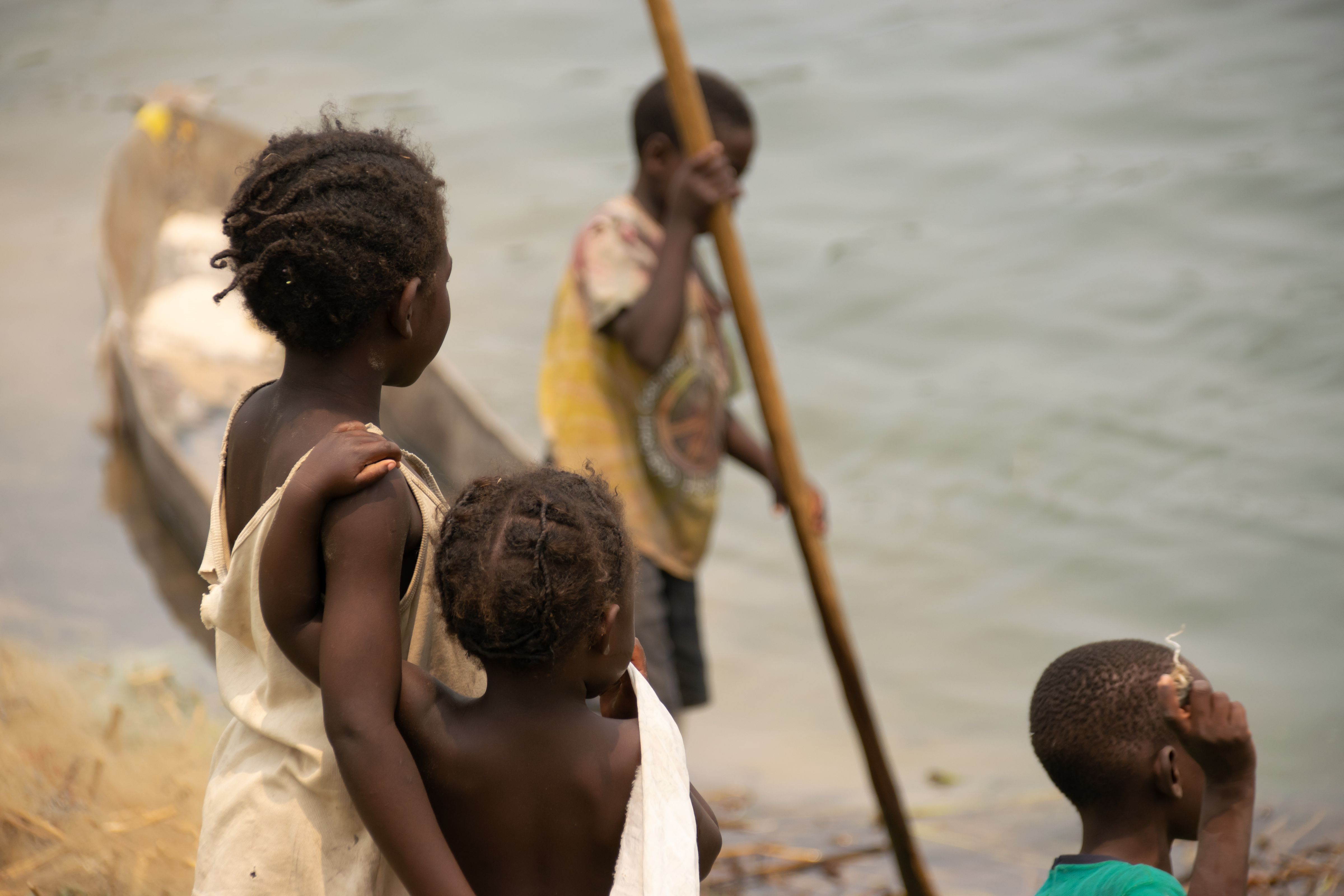
In rural Zambia, the answer comes into sharp focus. Most people here are subsistence farmers, and survival leaves little room for restraint. When families have limited food, the forest pays the price — and people say so openly. This is a symptom of broken food systems that force impossible choices between feeding children today and protecting the land tomorrow.
By Life Connected is working to change that equation by helping communities design food systems that nourish people and the ecosystems they depend on.
The Model
We use a bottom-up community-led method of development that organizes and mobilizes the community. It incorporates the values “unity” and “if we take care of nature, nature will take care of us” in the decision-making process, providing direction towards sustainable projects.
We enable a communally driven system change leading to sustainable food systems, in which By Life Connected only supports and facilitates.
The model of these sustainable food systems consists of four pillars:
Water Security - Food Security - Conservation Education - Sustainable Energy
This method is currently applied to areas with an agricultural focus, which resulted in these specific pillars. The strength of this method, is that it can be applied to areas with a different traditional focus, for example pastoralists or hunter/gatherers. This can result in a different sustainable food system design.
Water Security
By creating access to water year-around, a community can be greatly uplifted. For example by forming a perennial river that people can use for gardening, fishing and feeding their livestock throughout the year.
Food Security
When there is enough water, food security follows. We focus on regenerative farming: improving the soil health without the use of chemicals and soil tillage.
Conservation Education
The conservation leaders of tomorrow are in school today. Through Conservation Education clubs, children learn from wildlife scientists, rangers, and organic farmers — then experience wild animals firsthand on safari. Wonder, it turns out, is a powerful teacher.
Sustainable Energy
To fight deforestation, By Life Connected is tackling both supply and demand. Bamboo plantations on degraded farmland offer a sustainable alternative to timber and charcoal, while over 21,000 clean cooking stoves have been distributed to communities around Kafue National Park. Where the forest has already suffered, farmers are bringing it back through Farmer Managed Natural Regeneration.